-
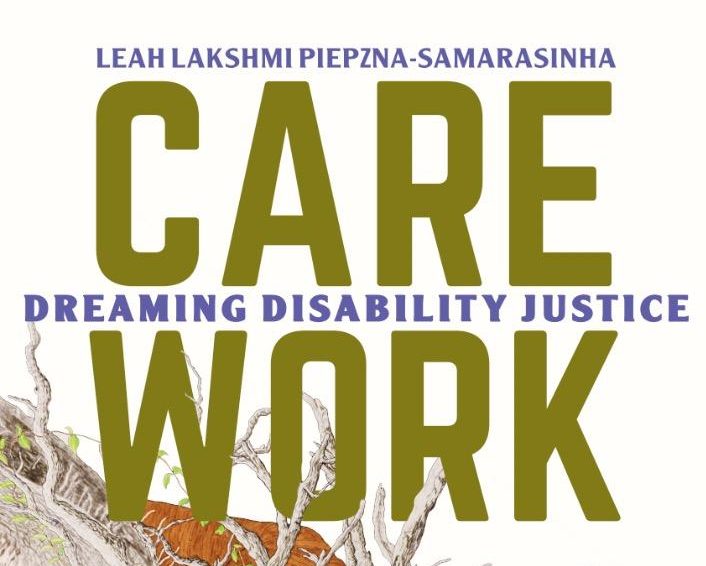
Care Work: Dreaming Disability Justice
A Book Review by The PeerWorks Peer Book Club
For our second book, the Peer Book Club read Care Work: Dreaming Disability Justice (2018), a powerful collection of essays by Leah Lakshmi Piepzna-Samarasinha that delves into the lived realities and political vision of the Disability Justice movement. Within this book, focused on documenting “a movement that centres the lives and leadership of sick and disabled queer, trans, Black and brown people,” many of us found kinship, solidarity, and shared lineage, despite our differences in identity.
Care Work provides nuanced and provoking descriptions of what the 10 Principles of Disability Justice look like in practice. Piepzna-Samarasinha skillfully weaves together personal narrative, political analysis, and cultural reflection, highlighting the relationship between art, culture, community care, and social movements. The book provided us with the opportunity to locate and orient ourselves within the lineage of the Disability Justice movement, as well as its intersections with peer support and mutual aid. One particularly notable chapter traces the origins of Toronto’s first Psychiatric Survivor Pride Day (now Mad Pride) in the 1990s, highlighting the connections between disability justice and psychiatric survivor organizing.
For our book club, this text created a space for co-learning, consciousness-raising, and camaraderie. At our final meeting, members reflected on how our meetings served as a place to exchange “crip” (disability) knowledge and access “crip doulaship” – peer support and mentorship that guides people into disability culture and community as a form of rebirth.
Interested in joining the Peer Book Club?
For our next book club, we will be reading Mutual Aid: Building Solidarity During This Crisis (and the Next) by Dean Spade (2020). Our first meeting will be on March 4, and we will meet every other Wednesday from 6-8pm (Eastern Time). Register for the Peer Book Club here.
-
Disabled Dreaming
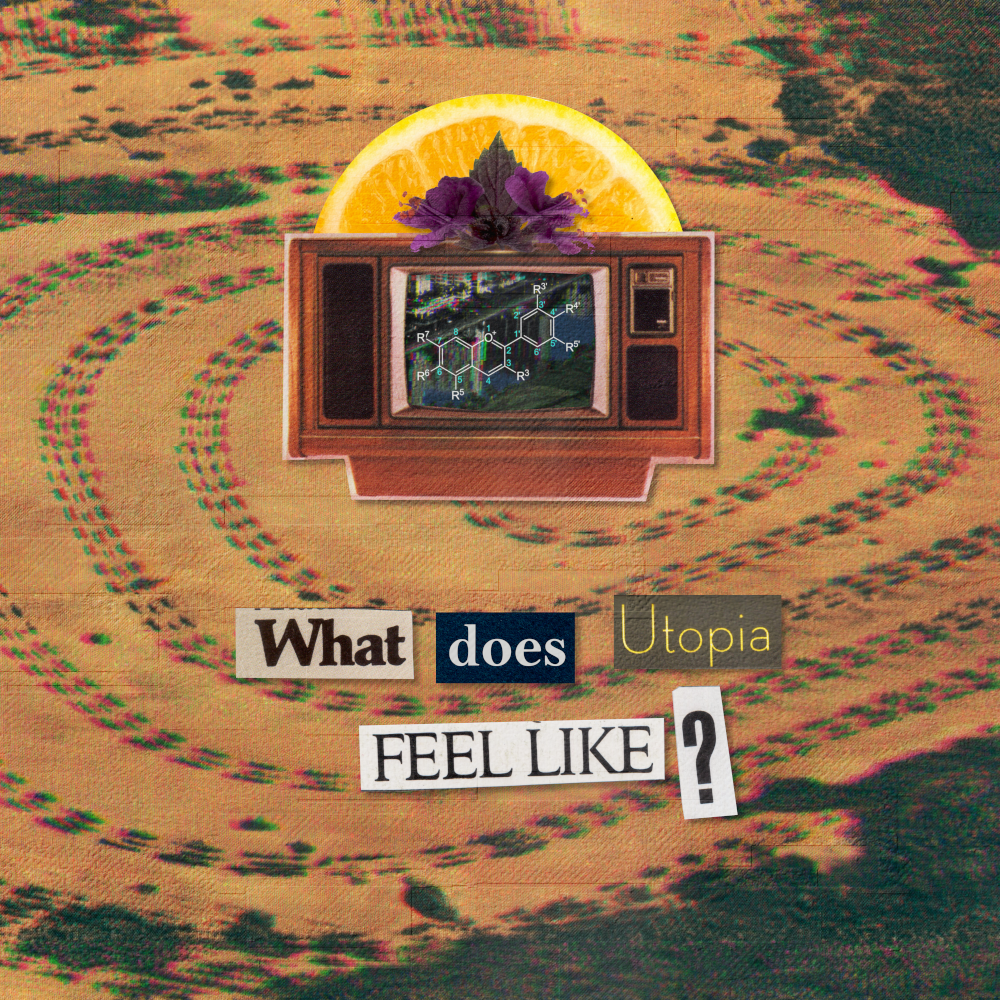
I’m happy to share that I’ve had two pieces published in Disabled Dreaming: Seeking a Future of Proactive Accessibility in Teaching & Learning, the second issue of the Dis/Orientation zine published by McMaster University. You can read them through the links below.
Dreaming Through the Cracks is an essay about the generative potential of neglect as a catalyst for dreaming and constructing more care-full and relational worlds, grounded in collective access.
Intake is a poem about the disempowering ways medical, mental health, and accommodation systems transform personal stories into institutional narratives, stripping humanity and relationality in the process.
-
Peer Book Club: Mutual Aid

I’m excited to share that the PeerWorks Peer Book Club is back for 2026 — with our first meeting taking place on March 4!
This time we will be reading the book Mutual Aid: Building Solidarity During This Crisis (and the Next), by Dean Spade (2020). We will meet every two weeks over Zoom, on Wednesdays from 6:00-8:00pm (Eastern Time).
You can register for the Peer Book Club on the PeerWorks website.

We welcome all folks who are engaged or interested in work related to peerness — in the realm of direct support (formal or informal), activism, art and cultural work, scholarship, and more!
You might be interested in joining if you are:
- A peer supporter, peer worker, community worker, or lived experience worker
- A Mad / disability studies scholar
- An activist, social justice, or cultural worker
- Engaged in work related to peerness
- Someone with experiences of distress, extreme states, and/or navigating the mental health system
- Interested in learning more!
-
Peer Support Futures
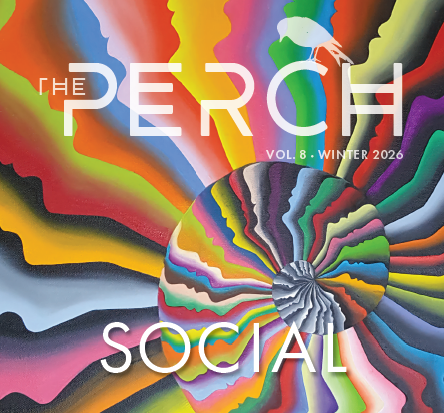
My essay, “Peer Support Futures” has been published in The Perch, an open-access (free to read) creative arts mental health journal, published by the Yale Program for Recovery and Community Health.
Read “Peer Support Futures” online
This paper is based on my previous major research paper “Dreaming Peer Support Futures“, and is an exploration of the discipline of peer support through a lens of futurity and utopia. It outlines how futures thinking has always been at the heart of mental health peer support, both in terms of its social movement origins (as dreams and demands for a better world) and contemporary practices (through the peer support value of “hope”). It frames “recovery” as the reclamation of self-determination over our own futures, as well as privileges lost through psychiatrization. Lastly, it aims to trouble the dominant (white/Western) “origin story” of mental health peer support, highlight its impact on the present, and encourage the dreaming of alternative peer support futures grounded within diverse peer knowledges and lineages.
-
Peer Book Club – Fall 2025

I’m excited to share that the PeerWorks Peer Book Club is back for the Fall — with our first meeting taking place on October 7!
The Peer Book Club will meet every two weeks over Zoom, on Tuesdays from 6:00-7:30pm (Eastern Time). Instead of reading a full book, this round of the book club will be focused on a different short reading each week.
You can register for the Peer Book Club on the PeerWorks website.

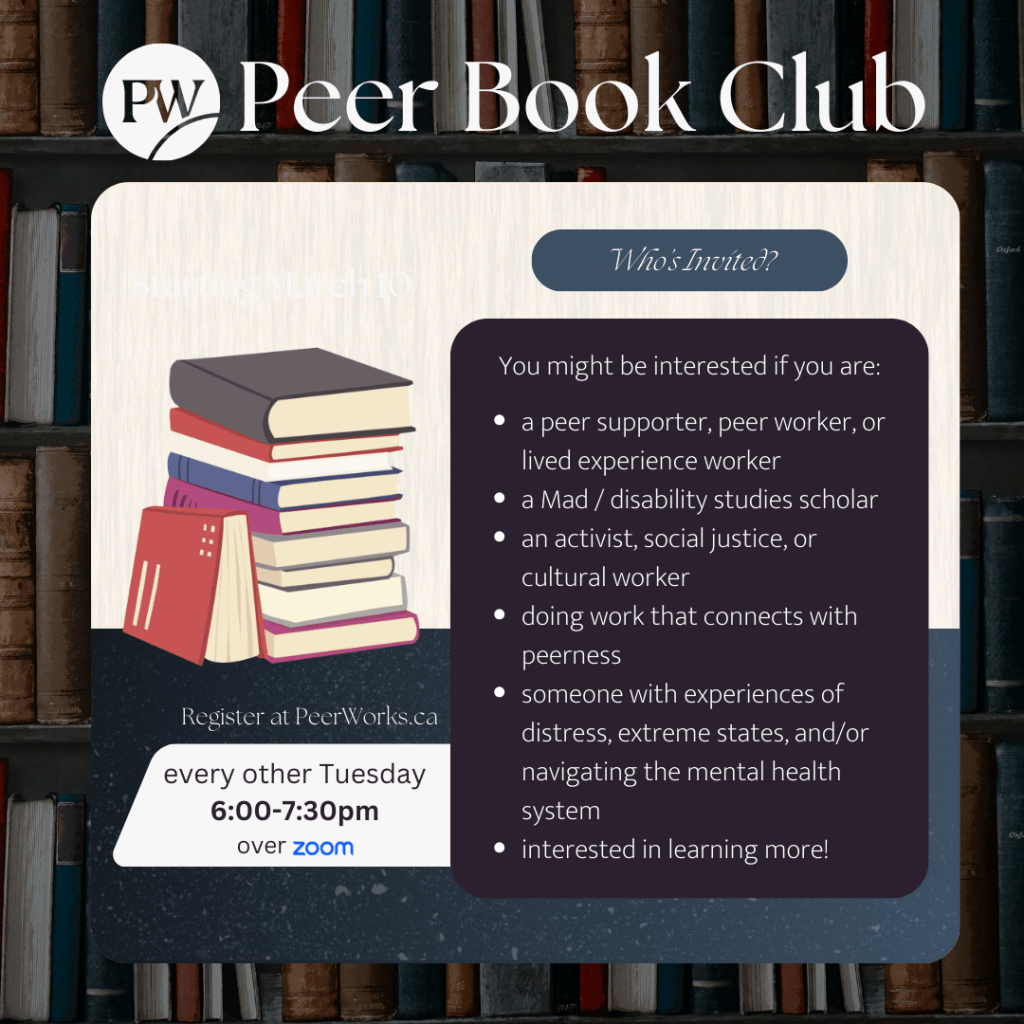
We welcome all folks who are engaged or interested in work related to peerness — in the realm of direct support (formal or informal), activism, art and cultural work, scholarship, and more!
You might be interested in joining if you are:
- A peer supporter, peer worker, or lived experience worker
- A Mad / disability studies scholar
- An activist, social justice, or cultural worker
- Engaged in work related to peerness
- Someone with experiences of distress, extreme states, and/or navigating the mental health system
- Interested in learning more!
Our reading list for the fall includes:
- Oct 7: Mutual Aid: Building Solidarity During this Crisis (And the Next), Dean Spade (2020), Parts 1-2 of Full Book OR Study Guide
- Oct 21: Suicide Intervention (for Weirdos, Freaks, and Queers), Carly Boyce (n.d.), Webinar or Zine
- Nov. 4: Fighting Psychiatric Abuse: The BPP and the Black Disability Politics of Mental and Carceral Institutions. Chapter in Black Disability Politics (pages 48-68), Sami Schalk (2022)
- Nov. 18: Pods and Pod Mapping Worksheet (6 pages), Ma Mingus & The BATJC
- Dec. 2: TBD
-
Trends & Emerging Issues in Peer Support

Following the 2025 PeerWorks and Peer Support Canada conference in May, I have been reflecting on what I understand to be some key emerging issues and trends for the peer support sector in Ontario and beyond — early indicators of change with the potential to dramatically shape what the sector will look like in the years and decades to come. Many of these are topics that folks within the peer work sector have already starting thinking and talking about.
Exploring the potential impacts of emerging issues allows us to proactively respond to issues before they fully emerge, as well as identify new opportunities that can be leveraged for the benefit of the sector.1 In other words, emerging issues analysis enables us to identify and prepare for possibilities and challenges on the horizon, that have yet to be fully realized.
Many of these emerging issues intersect with pre-existing challenges and shifts within the peer support sector, as well as the broader world:
- loss of independence and autonomy within the peer sector
- increasing recognition of peer support drift
- professionalization of peer support
- privatization of healthcare
- austerity funding regimes
Artificial Intelligence (AI)
Over the past few years, the interest and use of artificial intelligence (AI) has been rapidly expanding, including within the healthcare system. Studies are already beginning to emerge focused on peer support delivered via AI chatbots,2,3 as well AI-supported peer support4 — although many of these articles appear to have little to no grounding in psychiatric consumer/survivor (c/s) movement histories, models of support, or literature.
Further, LinkedIn’s AI-assisted “Collaborative Articles” (now discontinued) provides information about professional skills, including within the realm of peer support.5 However, these articles often fail to ground their recommendations within the unique history of the peer support sector, thus raising the potential of peer support drift. For example, one article (no longer accessible) on peer support documentation mirrored clinical practices, rather than providing guidance grounded in peer support values.
How will the sector be shaped by a world with an increasing reliance on AI? What role will AI play in the future of the peer support sector, as well as the healthcare sector more broadly?How might this impact our education, workforce, and work experiences (e.g. unemployment, burnout, hours, wages), as well as quality of care provided? Are there ways to leverage AI as a tool that works for us and our interests, rather than against us?
Education & Credentialism
In recent years, there has been increasing interest in exploring further education for the peer support sector. This has been proposed as a strategy to both demonstrate the legitimacy of peer support, as well as justify higher wages for peer support workers.
In the future, will peer support require post-secondary credentials? If so, who will be responsible for curriculum development? Will the peer support sector be able to leverage educational development as a strategy for reclaiming our independence? Or will educational requirements further contribute to peer drift — for example, if the curriculum is directed and taught by those working in other mental health disciplines? What are the key learning outcomes for further education? How might educational requirements increase barriers to entering the field, reinforce pre-existing inequities, and influence the availability of culturally-grounded support?
Regulation
In recent years, the increased awareness of peer support within the public sphere has resulted in external pressures for regulation and certification. In May of 2023, MPP Stephen Crawford presented a private members bill to the Ontario legislature, calling for the government to consider “a process for the certification of addiction peer support specialists” (p. 4362).6 Although this motion was later withdrawn, it represents growing external pressure for the regulation of peer support.
Will the peer support sector adopt regulation as a form of gaining legitimacy within the broader healthcare system? If so, who will be responsible for our regulation? Will the sector proactively implement our own regulatory standards, or will these be imposed on us externally?
Unionization
There has also been discussion within the peer support sector about exploring unionization as a strategy for improving our work experiences, pay, and preventing peer support drift. There is a precedent for this, with some harm reduction peer workers in Vancouver voting to unionize in 2021 — albeit not without its challenges and shotcomings.7 However, the relative isolation of peer support workers across Ontario would make it challenging to develop a peer support specific union, while more general unions may not be equipped to best advocate for the unique needs of peer support workers.
Will peer supporters unionize — if so, how? Will we attempt to create our own union specific to peer supporters, or join a larger union that may not fully understand the unique work we do? What would unionization accomplish — and what unintended consequences might arise? Could unionization within a broader healthcare union inadvertently contribute to peer support drift?
Involuntary Care
Both within and beyond Ontario, there have been trends toward the expansion of involuntary mental health care. In October of 2024, citing the increasing rate of homelessness, mental health, and addictions, Ontario’s Big City Mayors passed a motion calling upon the province to explore the possibility of “expand[ing] the scope of … mandatory community-based and residential mental health and addictions care and treatment” (p. 3).8 This follows recent expansions to involuntary care in British Columbia in September of 2024.9
It is worth noting here the history of the psychiatric consumer/survivor/ex-patient movement in advocating against coercive care, leading to many of the restrictions in place today. More recently, many organizations involved in the Mental Health & Addictions (MAPS) program for people navigating the criminal justice system have successfully advocated for the requirement that peer support must always be voluntary — never mandated.10
With peer support’s emphasis on self-determination and historical opposition to coercive care, how might peer support engage with these models, as well as people coerced into “care” — as accomplices, advocates, or alternatives?
Conclusion
Exploring emerging issues and trends — as well as their possible impacts — will enable the peer discipline to better anticipate and adapt to the world to come. They can help us avoid “worst-case scenarios” and identify opportunities for working towards our own interests. Proactively preparing for tomorrow today will support the peer support sector in self-determining our future on our own terms — rather than getting trapped in cycles of reaction, and someone else’s vision of our future is forced upon us.
References
- Inayatullah, S. (2008). Six pillars: Futures thinking for transforming. foresight, 10(1), p. 4-21. https://doi.org/10.1108/14636680810855991
[open-access PDF] ↩︎ - Fortuna, K.L., Venegas, M., Umucu, E., Mois, G., Walker, R., & Brooks, J.M. (2019). The Future of Peer Support in Digital Psychiatry: Promise, Progress, and Opportunities. Current Treatment Options in Psychiatry, 6, 221–231. https://doi.org/10.1007/s40501-019-00179-7 ↩︎
- Young, J., Jawara, L. M., Nguyen, D. N., Daly, B., Huh-Yoo, J., & Razi, A. (2024, May). The role of AI in peer support for young people: A study of preferences for human-and ai-generated responses. In Proceedings of the 2024 CHI Conference on Human Factors in Computing Systems (pp. 1-18). https://doi.org/10.1145/3613904.3642574 ↩︎
- Sharma, A., Lin, I. W., Miner, A. S., Atkins, D. C., & Althoff, T. (2023). Human–AI collaboration enables more empathic conversations in text-based peer-to-peer mental health support. Nature Machine Intelligence, 5(1), 46-57. https://doi.org/10.1038/s42256-022-00593-2
[open-access PDF] ↩︎ - LinkedIn (n.d.). Learn more about Collaborative Articles ↩︎
- Legislative Assembly of Ontario (2023, May 16). Official Report of Debates (Hansard), 78B. ↩︎
- Vescera, Z. (2023, Dec 5). Union Drive Backfires for Some PHS Peer Workers. The Tyee. ↩︎
- Ontario’s Big City Mayors (2024, Oct 18). Motion on Chronic Homelessness, Mental Health, Safety and Addictions Crisis. ↩︎
- Canadian Mental Health Association (2024, Sept 18). Involuntary Care Already Exists in BC, But Is It Working? ↩︎
- e.g. the Northern Initiative for Social Action ↩︎
-
Peer Book Club

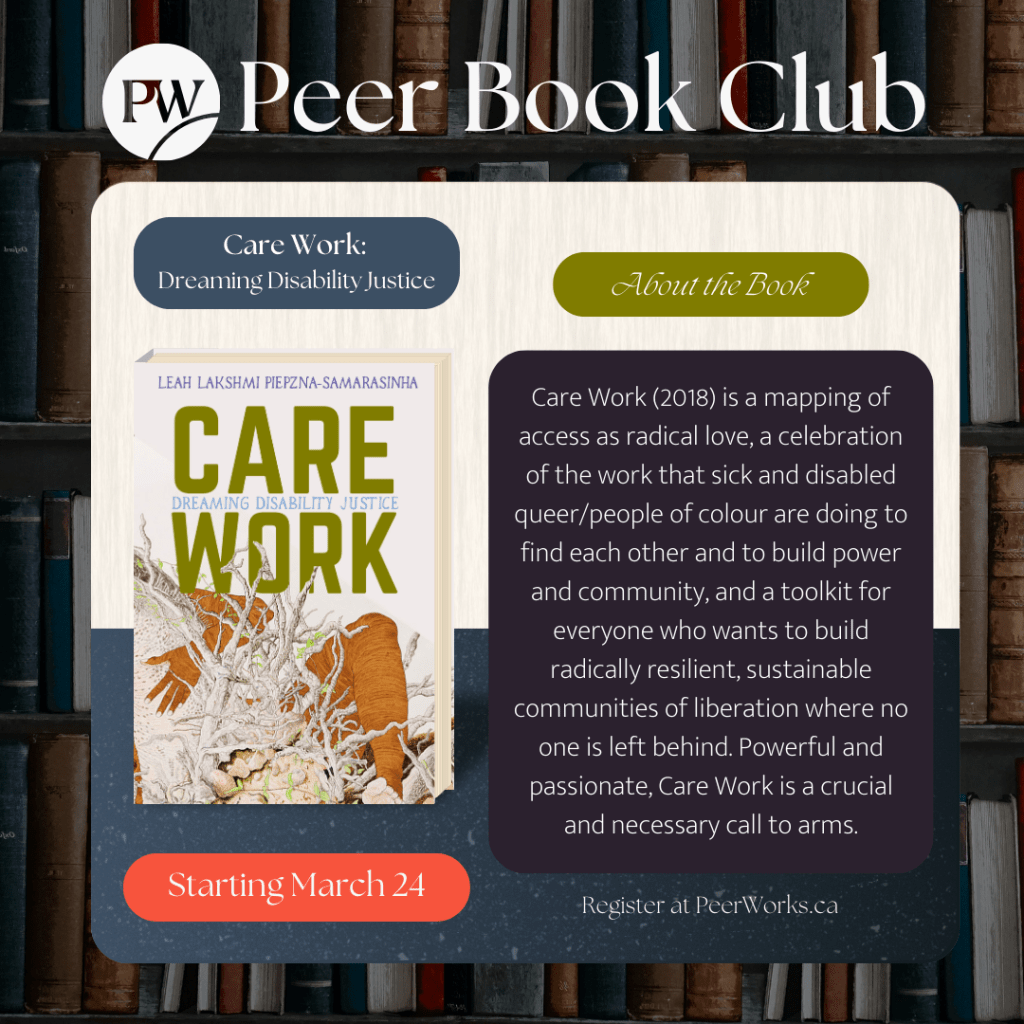
I’m excited to share the next book we will be reading for the Peer Book Club I co-facilitate with PeerWorks — Care Work: Dreaming Disability Justice (2018) by Leah Lakshmi Piepzna-Samarasinha!
The Peer Book Club will meet every two weeks over Zoom, on Mondays from 6:00-7:30pm (Eastern Time). Our first meeting will be on March 24, where we will be discussing the preface. You can register for the book club on the PeerWorks website, and view the reading schedule here.
The book is available for purchase directly from the publisher’s website, which you can also use to find a local bookstore that carries it. It’s also available on Indigo and Amazon.

The Peer Book Club emerged from a desire for more opportunities to engage with literature about peer support, mutual aid, and social movements. We aim to foster a relaxed environment for discussion, with a focus on literature that is accessible and relevant to a wide range of audiences. No pressure to show up every time, or always have the reading done in advance!
You might be interested in joining if you are:
- A peer supporter, peer worker, or lived experience worker
- A Mad / disability studies scholar
- An activist, social justice, or cultural worker
- Engaged in work related to peerness
- Someone with experiences of distress, extreme states, and/or navigating the mental health system
- Interested in learning more!
About the Book: Care Work (2018) is a mapping of access as radical love, a celebration of the work that sick and disabled queer/people of colour are doing to find each other and to build power and community, and a toolkit for everyone who wants to build radically resilient, sustainable communities of liberation where no one is left behind. Powerful and passionate, Care Work is a crucial and necessary call to arms.
-
Claiming “Peer”: What’s in a Word?
On Tuesday February 4, I will be presenting at the annual Peer Support Strong conference, hosted by PeerWorks and the Lived Experience & Recovery Network (LERN). This conference is fully virtual and free to attend. Watch the Recording
My presentation will explore the various ways “peerness” has been conceptualized in peer support literature and practice, encouraging a relational (re)turn within the sector.
Claiming “Peer”: What’s in a Word?
Tuesday, February 4
10:30 – 11:15 Eastern TimeWhat does it mean to claim “peerness”? The way we define “peer” has direct implications for how peer support and peer work are practiced, as well as how the field itself is structured. This presentation will explore the different ways the
language of peerness is taken up: as an identity term signifying lived experience; a disciplinary term identifying a particular way of knowing; and a generative relational framework which allows us to identify with those we support across differences.This presentation will explore the impact of language on practice, as well as who is left out from dominant definitions of peerness. Lastly, it will outline how nurturing an expansive politics of peerness can enable peer support futures characterized by renewed solidarity and collaboration amongst a diverse range of peer sectors.
-
Peer Futures Reading List

In celebration of the new year, I thought I would share a list of 10 books I am looking forward to reading (or re-reading) in 2025, related to peerness / community care, futurity, and peer futures.

Care Work:
Dreaming Disability JusticeLeah Lakshmi Piepzna-Samarasinha
2018Inara:
Light of UtopiaMx. Yaffa AS (Editor)
2024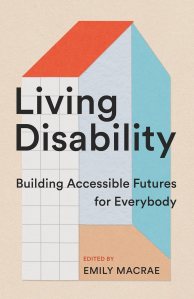
Living Disability:
Building Accessible Futures for EverybodyEmily Macrae
2024
A Psalm for the Wild-Built
From the Monk and Robot seriesBecky Chambers
2021
Designing Futures:
Speculation, Critique, InnovationBenedikt Groß & Eileen Mandir
2024
How to Make Art at the End of the World:
A Manifesto for Research-CreationNatalie Loveless
2019
Love in a F*cked-Up World:
How to Build Relationships, Hook Up, and Raise Hell TogetherDean Spade
2025
Recognizing the Stranger:
On Palestine and NarrativeIsabella Hammad
2024
Practicing New Worlds:
Abolition and Emergent StrategiesAndrea J. Ritchie
2023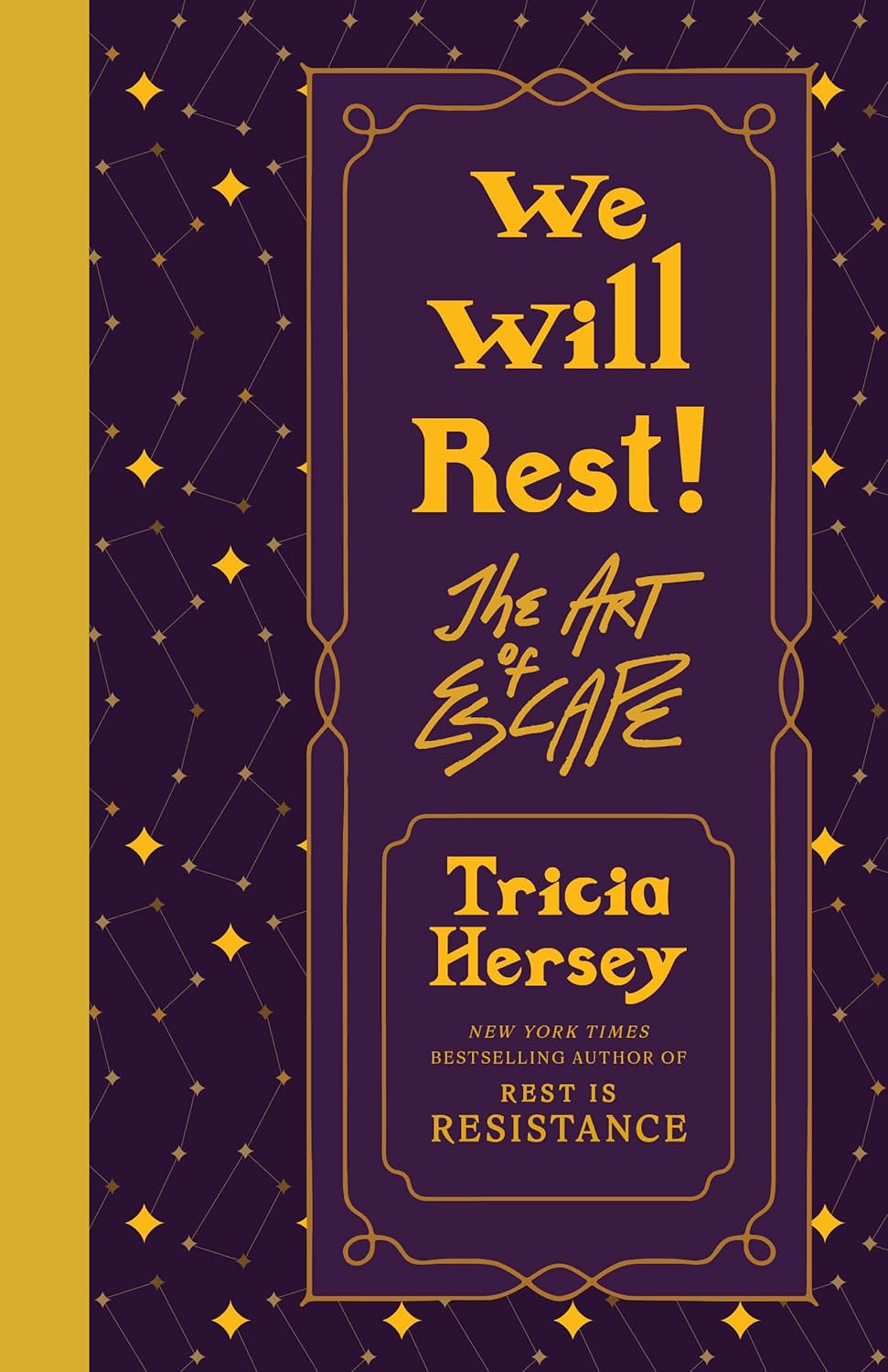
We Will Rest!
The Art of EscapeTricia Hersey
2024 -
Purple Basil Lemonade: Community Rituals for Crip Pasts / Presents / Futures
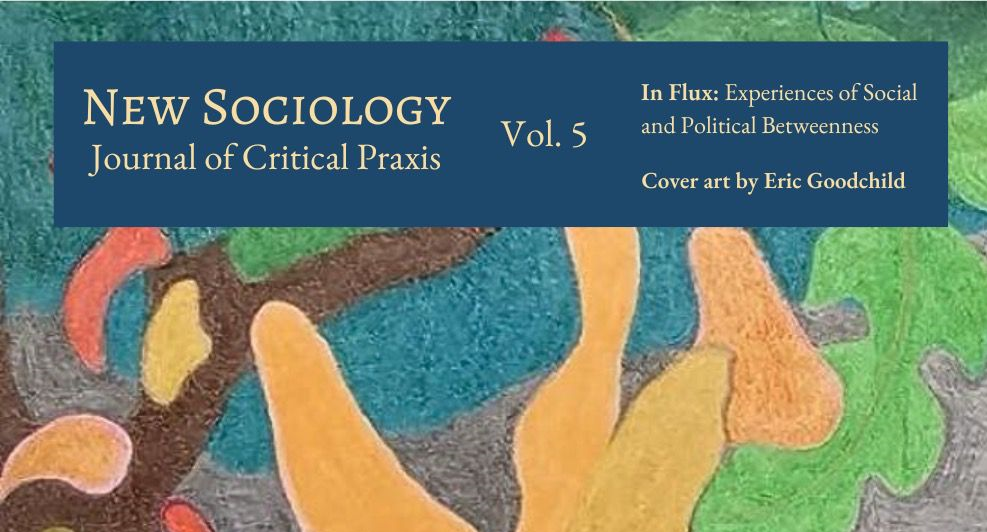
My essay, “Purple Basil Lemonade: Community Rituals for Crip Pasts / Presents / Futures” has been published in the open-access (free to read) journal New Sociology.
Read on the New Sociology website
Abstract: This piece is a collection of stories and reflections on community, loss, memory, access, rest, and dream(ing), developed through the process of making and sharing purple basil lemonade. This practice serves as a method of re-turning (to) the past, refusing the present, and dreaming alternative futures–a re-mixing of temporalities, always grounded in relation, always in an ongoing process of rebecoming. It is a ritual for storytelling, community, memory work, and dreamwork in the era of COVID-19, a time marked by the normalization of eugenic discourses and the erasure of disabled people from the public sphere.

-
Subscribe
Subscribed
Already have a WordPress.com account? Log in now.
 calvin prowse