For women … poetry is not a luxury. It is a vital necessity of our existence. It forms the quality of the light within which we predicate our hopes and dreams toward survival and change, first made into language, then into idea, then into more tangible action. Poetry is the way we help give name to the nameless so it can be thought.
– Audre Lorde, 1977/2007
Poetry is Not a Luxury
in Sister Outsider: Essays and Speeches, p. 37
Poetry is not a luxury: it is a way of feeling, of giving our dreams shape; an ancient technology for imagining something radically different than the here and now, buried but never forgotten.
Poetry is not a luxury: it is a matter of survival in a world that demands and depends on the death of our dreams; our ability to imagine something different, something better, something new.
Poetry is hope: it is the promise of alternative futures; poetry is resistance, refusal, and revolution: it is an essential way of being, whose qualities have been obscured in the subjugation of feminized feminist feeling under the (masculine, colonial, white) supremacy of logic and rationalism1,2– a cutting away of the soul.3
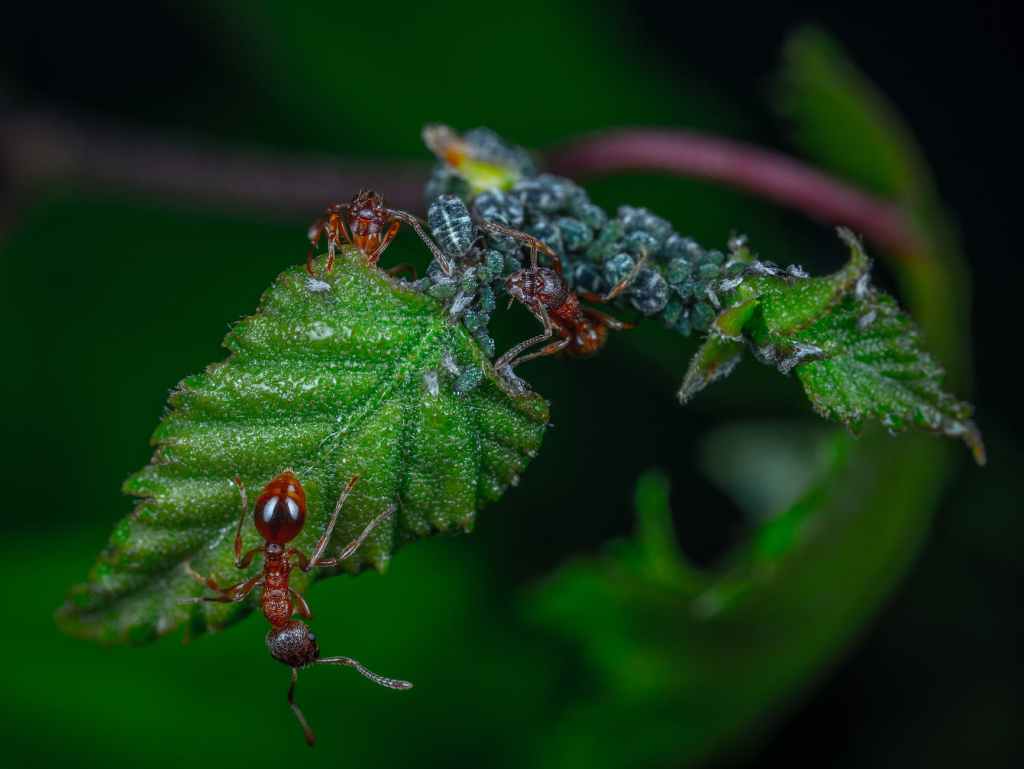
I am reminded of fire ants. Fire ants have a stage of sleep called Rapid Antennal Movement (RAM) sleep, which appears to be a rough analogue of Rapid Eye Movement (REM) sleep in vertebrates such as us.4 The majority of our dreams take place during REM sleep; I wonder: what do fire ants dream of?
Poetry is not a thing, an object, a noun: it is a verb, a doing, a dialogue – between poet, reader, listener, and the worldviews we hold within us, always in a process of (re)becoming. Poetry does not happen in isolation: it demands an audience; it is an invitation toward an entangled mode of relation.
Some species of ants can have multiple queens for one colony; such is the case with the fire ant, Solenopsis invicta. In fire ant colonies with more than one queen, their sleep schedules synchronize with one another:4 they move together.
I wonder: how can we synchronize with each other?; how can we dream, together?; how can we move together?; how can we breathe, together; to be(come) co-conspirators for decolonial futures, together?6,7
Poetry is not a luxury: it is a bodymind necessity. Poetry is entangled embodiement: when our bodyminds move, in the multiplicity of ways that they do, we become poetry in action.
The sleeping patterns of fire ants are a synchronized dance: an entanglement of Self and Other into one Being, one Movement; a moment of rest between stanzas.
- Patricia Kaishian & Hasmik Djoulakian (2020). The science underground: Mycology as a queer discipline. Catalyst: Feminism, Theory, Technoscience, 6(2), 1–26. (open access ↩︎
- Audre Lorde (1977/2007). Poetry is not a luxury. In Sister outsider: Essays and speeches (pp. 36–39). Ten Speed Press. ↩︎
- Tricia Hersey (2022). Rest is resistance: A manifesto. Little, Brown Spark. ↩︎
- Deby L. Cassill, Skye Brown, Devon Swick, & George Yanev (2009). Polyphasic wake/sleep episodes in the fire ant, Solenopsis invicta. Journal of Insect Behavior, 22(4), 313–323. (open access ↩︎
- Deby L. Cassill, Skye Brown, Devon Swick, & George Yanev (2009). Polyphasic wake/sleep episodes in the fire ant, Solenopsis invicta. Journal of Insect Behavior, 22(4), 313–323. (open access ↩︎
- Sefanit Habtom & Megan Scribe (2020, June 2). To breathe together: Co-conspirators for decolonial futures. Yellowhead Institute. (open access) ↩︎
- Natasha Myers (2021, January 6). How to grow liveable worlds: Ten (not-so-easy) steps for life in the Planthroposcene. ABC Religion & Ethics. (open access) ↩︎
 calvin prowse
Leave a comment